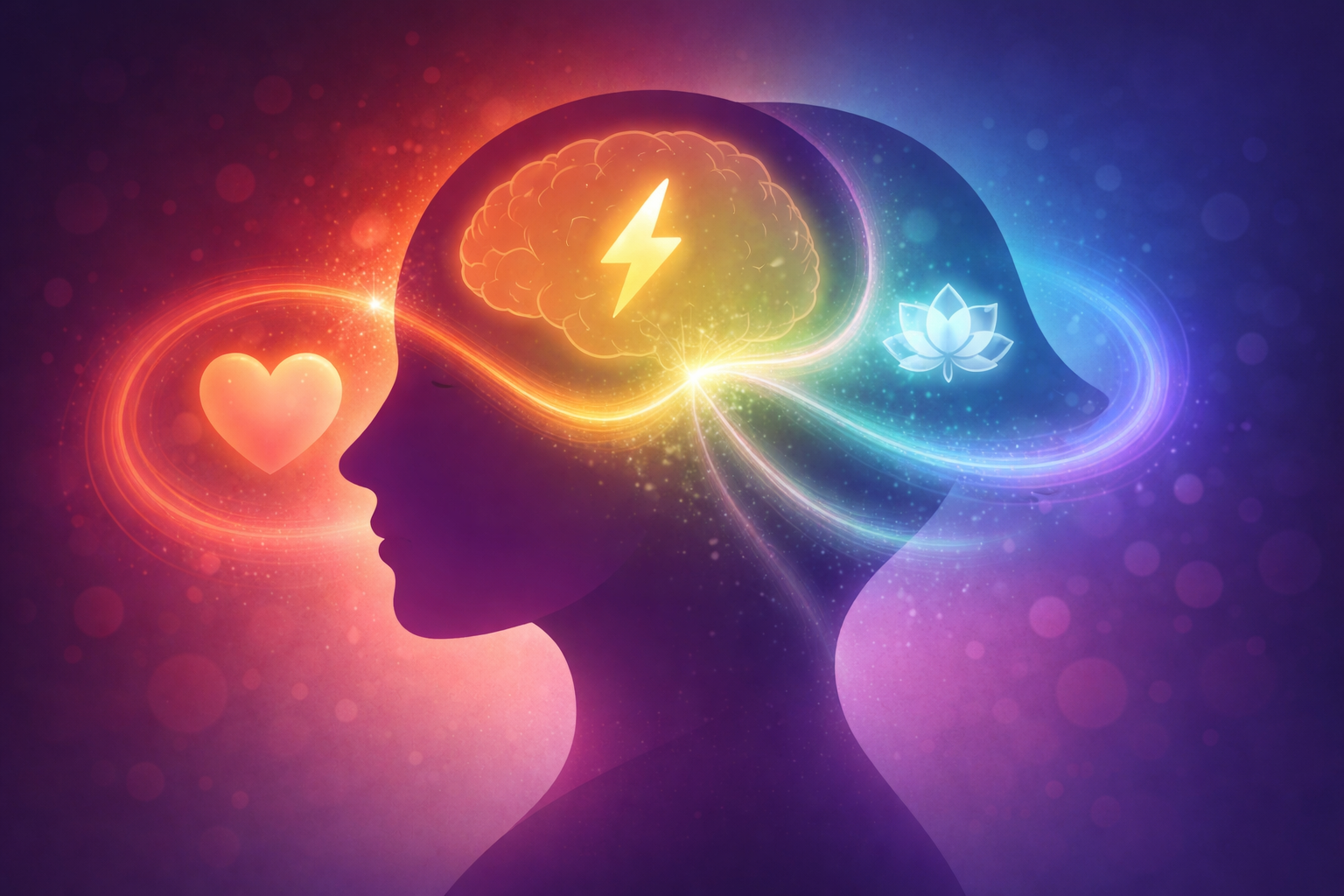
The Three Systems Model – sometimes called the Three Circles Model – is a core part of Compassion Focused Therapy (CFT). It offers a powerful framework for understanding our emotional lives and can be particularly helpful for people with ADHD, who often experience intense emotions, high self-criticism, and cycles of burnout and overwhelm.
In therapy and self-help contexts, this model helps people make sense of why they feel the way they do, and crucially, how to create more balance and self-compassion.
Why do we need emotion models at all?
Psychologists have long tried to understand how emotions are organised. Some models divide emotions into “positive” and “negative”, others focus on energy levels (high-energy emotions like excitement or fear versus low-energy emotions like sadness or calm), or whether emotions move us towards or away from things.
CFT takes a different approach.
Rather than categorising emotions by how pleasant they feel, the Three Systems Model groups emotions by their function – what they evolved to help us do. From an evolutionary perspective, our emotions developed to support three fundamental life tasks:
Detecting threat and avoiding harm
Seeking resources and achievement
Resting, restoring, and connecting
Each of these tasks maps onto one of the three emotional systems.
The Three Emotional Systems
The model is often shown visually as three coloured circles, which many people find an easy and validating way to talk about their internal experiences.
🔴 The Threat System
The threat system evolved to keep us safe. It’s associated with emotions like fear, anxiety, anger, shame, and disgust. When this system is active, our body and mind prioritise protection: scanning for danger, preparing to fight, flight, or freeze.
For people with ADHD, the threat system can be chronically activated. Missed deadlines, negative feedback, social misunderstandings, and years of feeling “not good enough” can prime this system to switch on quickly. This often shows up as:
High anxiety or emotional reactivity
Intense self-criticism
Rejection sensitivity
Avoidance or shutdown
Importantly, this is not a personal failing. It reflects how the brain has learned to protect itself.[DH1]
🔵 The Drive System
The drive system motivates us to seek, achieve, and pursue goals. It’s linked to high-energy emotions like excitement, pleasure, and enthusiasm, and is powered by reward pathways in the brain.
ADHD is often associated with a highly sensitive drive system, particularly around novelty, urgency, and interest. This can look like:
Bursts of motivation or hyperfocus
Strong responsiveness to rewards
Difficulty sustaining effort when tasks feel boring or unrewarding
When the drive system dominates without enough balance, people can become exhausted, overstretched, or stuck in cycles of intense effort followed by burnout.
🟢 The Soothing System
The soothing system is linked to calm, contentment, safety, and connection. It helps us rest, recover, and feel emotionally regulated. This system is strongly associated with caregiving, attachment, and compassion, both from others and towards ourselves.
Many adults with ADHD have an underdeveloped or hard-to-access soothing system. Growing up with frequent criticism or misunderstanding can mean fewer experiences of feeling safe, accepted, or emotionally settled. As a result, rest may feel uncomfortable, and self-kindness may feel unfamiliar or undeserved.
ADHD and an Imbalanced System
In ADHD, it’s common to see:
A highly activated threat system (due to repeated stress, failure, or shame)
A spiky or unsustainable drive system
An underused soothing system
This imbalance helps explain why many people with ADHD feel constantly “on edge”, exhausted, or caught between over-effort and avoidance.
The Three Systems Model reframes this experience in a deeply compassionate way:
Your brain is doing its best to survive with the tools it has learned.
Where does self-compassion fit in?
Compassion Focused Therapy aims to help people rebalance these systems, not by eliminating threat or drive, but by strengthening the soothing system.
Self-compassion involves:
Self-kindness instead of harsh self-criticism
Common humanity, recognising you’re not alone in these struggles
Mindfulness, noticing thoughts and emotions without judgment
For people with ADHD, this internal shift can be transformative.
What does the research say?
Growing evidence supports the role of self-compassion and mindfulness in ADHD:
Neff (2021) found that adults with ADHD who practised self-compassion reported lower stress and improved emotional regulation.
Beaton et al. (2022) showed that self-compassion was associated with better mental health outcomes in adults with ADHD.
Poissant et al. (2019) found that mindfulness-based interventions improved attention and emotional functioning in adults with ADHD.
These findings align closely with the CFT goal of cultivating the soothing system to support regulation and resilience.
Practical implications for people with ADHD
Working with the Three Systems Model can help individuals:
Understand emotional reactions without self-blame
Recognise when threat or drive is dominating
Actively practise soothing strategies (e.g. compassionate imagery, grounding, paced breathing, supportive self-talk)
Build a kinder, more sustainable relationship with motivation and productivity
Over time, this can reduce chronic stress, improve emotional regulation, and support a more balanced and fulfilling life.
A compassionate conclusion
ADHD is not just about attention or impulsivity; it’s about how the emotional systems of the brain have learned to survive in a demanding world. The Three Systems Model offers a clear, humane way of understanding these patterns and opens the door to meaningful change.
By cultivating self-compassion and strengthening the soothing system, people with ADHD can move away from cycles of threat and burnout, and towards greater emotional safety, resilience, and self-understanding.
References
Neff, K. D. (2021). The role of self-compassion in mitigating stress and improving emotional well-being in adults with ADHD. Journal of Attention Disorders, 25(9), 123–137.
Beaton, D. M., Sirois, F., & Milne, E. (2022). The role of self-compassion in the mental health of adults with ADHD. Journal of Clinical Psychology, 78(12), 2497–2512.
Poissant, H., Mendrek, A., Talbot, N., Khoury, B., & Nolan, J. (2019). Behavioural and cognitive impacts of mindfulness-based interventions on adults with ADHD: A systematic review. Behavioural Neurology, 2019, 5682050.
[DH1]I think this needs more detail to explain why the chronic activation of the threat system is protective as the bullet points read more self destructive, e.g. that the early avoidance is primarily protective but secondarily leads to disability. At least this is how I understand it.