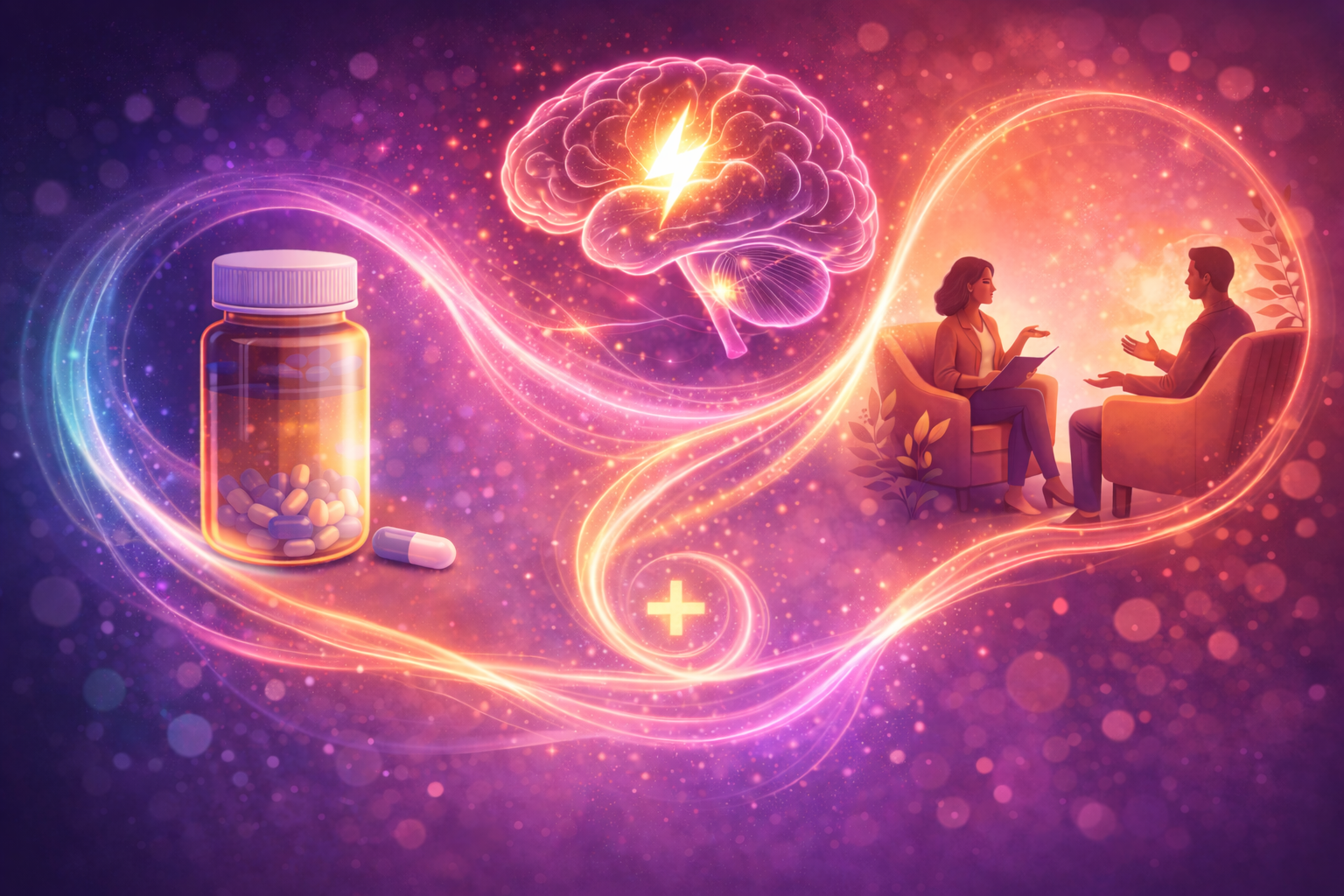
Post-diagnostic options after an ADHD diagnosis: medication, therapy, or both?
Authors: Dr Laura Wade, and Dr Dietmar Hank
Receiving an ADHD diagnosis as an adult can be validating, emotional, and sometimes overwhelming. One of the first questions people ask is:
“What happens next?”
In line with NICE ADHD guidelines (NG87, 2018), there is no single pathway that suits everyone. Treatment should be individualised based on level of impairment, personal goals, co-occurring difficulties, and preferences.
At Attention to Health, we offer evidence-based post-diagnostic support. You can access treatment with us even if your ADHD diagnosis was completed elsewhere through our transfer-of-care pathway.
1. Medication: the strongest evidence base
NICE guidance
NICE recommends medication as first-line treatment for adults with moderate to severe ADHD, alongside psychoeducation.
Psychological approaches alone are usually recommended when someone:
declines medication
cannot tolerate medication
has milder impairment
Effectiveness
ADHD medications—particularly stimulants—have:
the largest effect sizes of any ADHD treatment
strong evidence for improving attention, impulsivity, and executive functioning
consistent real-world functional benefits
Meta-analytic research shows pharmacological treatment produces the most robust reductions in core ADHD symptoms.
Limitations
Medication:
does not automatically build organisational systems
does not address shame, identity, or relationship patterns
requires titration and monitoring
This is why many people benefit from combining medication with psychological support.
2. Psychological therapy: skills, meaning, and comorbidity
NICE guidance
NICE recommends ADHD-adapted CBT for adults who:
choose not to take medication
have residual difficulties despite medication
want support with organisation, emotional regulation, or self-esteem
Effectiveness
Therapy is particularly helpful for:
executive functioning strategies
emotional dysregulation and rejection sensitivity
procrastination and avoidance cycles
negative self-beliefs
co-occurring anxiety and depression
Compared with medication, therapy has smaller effects on core symptoms, but a strong impact on functional change and psychological wellbeing.
Therapy answers a different question:
👉 “Now that I understand my brain, how do I live differently?”
3. Combined treatment: often the most effective approach
Many adults benefit most from medication plus therapy.
Research shows combined approaches improve both symptoms and functional outcomes more than single treatments alone, particularly for:
executive functioning
emotional regulation
occupational performance
quality of life
Medication can reduce cognitive load, making it easier to implement therapeutic strategies and maintain change.
4. Clinical reflection
Dr Laura Wade, Clinical Psychologist
Having worked in ADHD services for around nine years, I’ve seen how transformative medication can be. People often describe it as “putting glasses on for the first time”—the cognitive noise quietens, tasks feel possible, and there is space to think.
But ADHD is never just about attention.
It is also about:
how someone has learned to see themselves after years of struggling
the meanings attached to “underachievement”, “laziness”, or “being too much”
coping strategies such as perfectionism, avoidance, people-pleasing, or masking
the impact of missed diagnosis on identity and relationships
Medication can reduce symptoms, but it does not automatically shift:
deeply held negative core beliefs
shame and rejection sensitivity
trauma from repeated failure or criticism
relationship patterns shaped by undiagnosed ADHD
co-occurring anxiety, depression, or emotional dysregulation
These are often the factors that continue to limit someone’s life even when concentration improves.
Therapy creates space to explore:
what ADHD has meant in your life—diagnosed or undiagnosed
how it has shaped your self-concept
which narratives you are ready to change
For many people, this is where the most profound and sustainable change occurs—not just functioning better, but relating to themselves differently.
5. Choosing what’s right for you
A helpful clinical question is:
“What do I need help with right now?”
Need
Most helpful first step
Severe inattention/impulsivity
Medication (NICE first-line)
Mild ADHD or no medication
ADHD-adapted CBT
Emotional regulation or shame
Therapy
Ongoing impairment on medication
Add therapy
Holistic change
Combined approach
6. Accessing support at Attention to Health
At Attention to Health, we provide:
medication assessment and titration
ADHD-adapted psychological therapy
combined treatment pathways
You do not need to have been diagnosed by us to access treatment.
👉 Start here: https://athealth.uk/what-we-offer/our-process
👉 Transfer your care: https://athealth.uk/adhd-transfer-of-care
Key take-home messages
Medication has the strongest evidence base and is first-line for moderate–severe ADHD (NICE 2018).
Therapy supports skills, emotional regulation, identity, and comorbidity.
Combined treatment often produces the best functional outcomes.
ADHD support works best when it addresses the whole person, not just the symptoms.
References
NICE (2018) ADHD guidelines (NG87)
https://www.nice.org.uk/guidance/ng87
Combined treatment outcomes
https://pubmed.ncbi.nlm.nih.gov/25455577/
Pharmacological treatments meta-analysis
https://pubmed.ncbi.nlm.nih.gov/38823477/